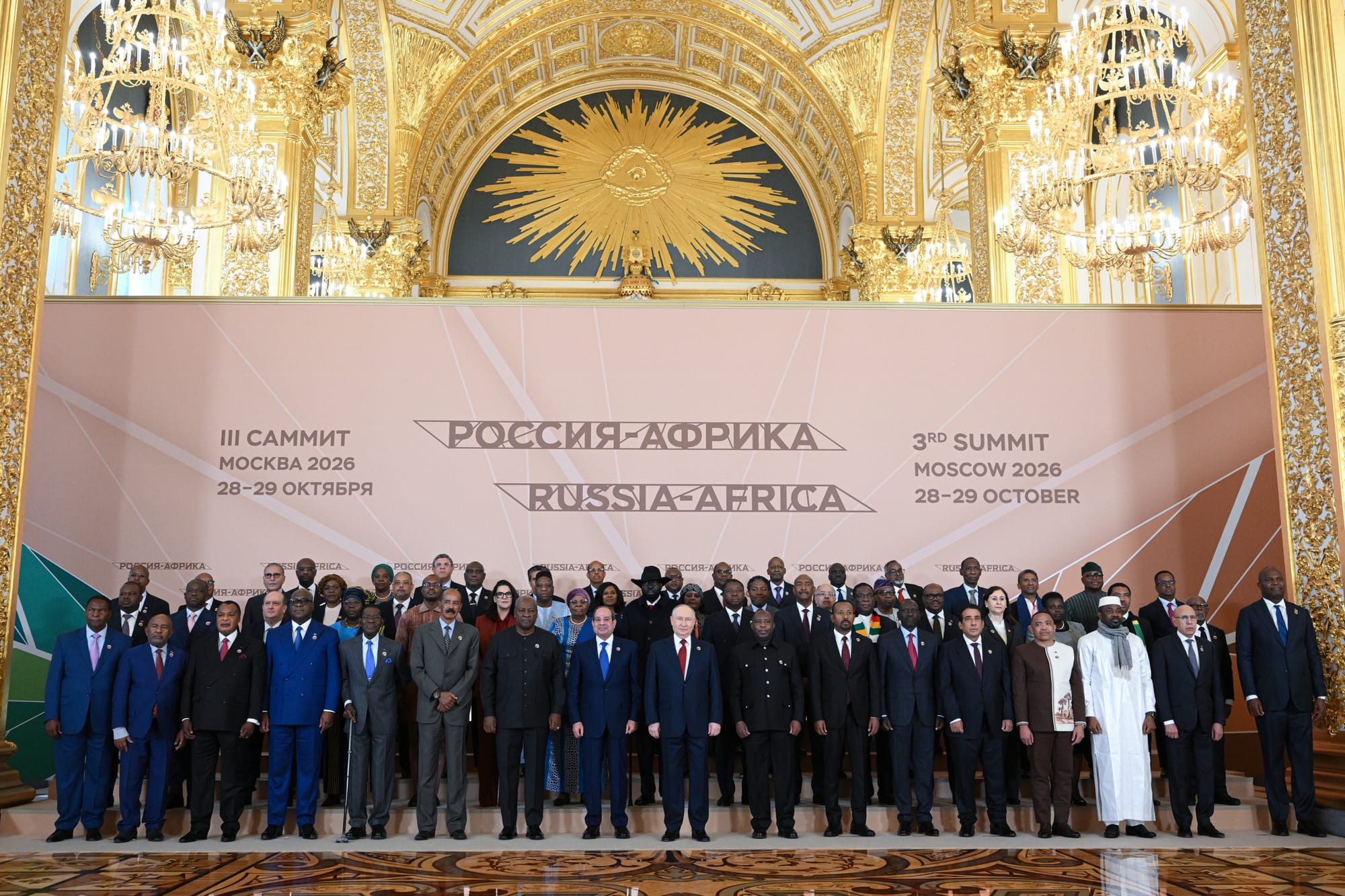
The Russian capital hosted the third Russia-Africa Summit, a high-level gathering aimed at expanding political, economic, and humanitarian ties between Moscow and African nations. In total, the summit and the parallel economic and humanitarian forum drew over 3,500 participants from 74 countries.
Economy tops the agenda
A primary focus of the discussions was strengthening trade links and exploring alternative mechanisms for economic cooperation. Conversations covered payments in national currencies, infrastructure development, artificial intelligence, and food security.
According to data presented by Russian officials, trade volume between Russia and Africa exceeded $27 billion in 2025, marking a 10.5% increase from 2023. Egypt and Algeria remain Moscow’s key trading partners in the region, while economic relations are also expanding with Morocco, South Africa, Tunisia, and Nigeria.
Energy and technological cooperation
Nuclear energy was another central theme. Representatives from Ghana and Ethiopia expressed interest in developing their first nuclear power plants, highlighting the importance of cooperation with Russia in this sector.
For his part, Putin highlighted the experience of state-owned enterprise Rosatom in developing international nuclear energy projects.
The summit also addressed the development of artificial intelligence and its application across various sectors. At the conclusion of the meeting, participants approved a specific declaration on cooperation in the civilian use of these technologies.
Africa’s role in international politics
The reform of the United Nations Security Council and increased African representation in international bodies were also on the agenda.
Representatives from the Democratic Republic of the Congo and Equatorial Guinea argued for correcting what they described as a historical injustice: the absence of African countries among the permanent members of the UN Security Council.
Putin expressed support for greater continental participation in international organizations, though he emphasized that any reform must be based on broad consensus among member states.
Additionally, the Russian president underscored Africa’s growing political and economic weight on the global stage and advocated for the development of a multipolar world order.
Summit outcomes
At the end of the meetings, Russia and African nations signed a total of 146 documents: 92 agreements and 54 memorandums. Key outcomes include the final summit declaration, a Russia-Africa partnership plan for the 2027-2029 period, and a declaration on artificial intelligence cooperation.
The Moscow meeting was the third of its kind. The first summit was held in Sochi in October 2019, with representatives from all 54 African countries. The second took place in St. Petersburg in July 2023, with delegations from 48 states on the continent.
With this new gathering, Moscow and its African partners seek to sustain political dialogue and expand cooperation in strategic sectors. The date and location of the next summit have not yet been announced.