On Sunday, October 25, Brazil held an election day. Lula's party faced the son of former president Jair Bolsonaro, Flavio Bolsonaro.
Liberal Party (PL) candidate Flavio Bolsonaro entered the runoff with 47.03% of the votes (56,104,503 votes). After his victory he had declared it was the end of the Workers' Party (PT) – Lula Da Silva’s party – but the prediction did not come true.
Lula, although he had reached the runoff with 45.16% of the votes (53,879,538 votes), won the head‑to‑head contest with 51.79% (64,256,232 votes) and is heading for his fourth term.
Bolsonaro received 48.21% of the votes, adding just over 3 million votes compared with the General Election, while Lula gained more than 11 million votes in absolute terms.
Abstention in this year’s general election was 21.08%, while the runoff saw 19.22% abstention.
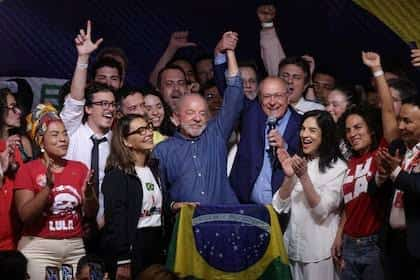
In São Paulo, Lula delivered a thank‑you speech to his electorate, addressing young people, seniors and especially women, emphasizing the central role they will have in his next administration.
At the same time, facing a Congress heavily dominated by right‑wing and centre‑right opposition—a recalcitrant legislature—Lula will have to act as a negotiator or take unilateral measures.
From his bunker, Lula stressed that he will change the way the country is governed, devote everything to this final presidential term, and give the population more avenues for participation.
Meanwhile, Bolsonaro invoked the specter of fraud, refusing to accept the election results and calling for the vote to be annulled. However, given the large vote gap between Lula and Bolsonaro (over 4 million votes), a challenge from the loser is not expected to succeed.